Keywords: Timeline, Overview, Basic Structure.
The Ages of the Mortal Plane
There are many ages in the mortal plane, each with a key aspects and detail a key period of mortal history. Here the early ages are discussed to give an overview of events that occurred in the lead up to the events that occur in the Age of Holy Enlightenment Trilogy. Not detailed here are the ages that follow the Age of Holy Enlightenment that include the Gaslamp Age, thousands of years after the Age of Holy Enlightenment and the Scientific Age that establishes itself tens of thousands of years after the enlightenment.
Pre-History
From the creation of the mortal plane chaotic convergence induced the expansion of matter and space. The fusion of base elements sparked the birth of stars and eventually planets formed in their orbit. As life evolved and mankind began walking upright family groups began to migrate. With tool use and cultivation came the first early civilisations. Technology and culture developed side by side as the people tried to understand the world around them, and their place in the universe. Very little survives from this time with the only record of its existence being fossils hidden in the ground and simple paintings made deep in lost caves.
The Ancient Age
The end of pre-history and the start of the Ancient Age is poorly defined. It is generally accepted that the point at which written records and histories started appearing was the start of the ancient age, however different cultures began such practices at different times. Most importantly the people who lived during this age did not refer to the era they lived in as ‘The Ancient Age’, and had no big picture view of the world around them. There were many different time keeping practices and languages, most of which were lost before any other culture had the chance to learn them.
Early trade routes became established as mankind’s technological development advanced and different cultures began interacting with each other. When cultures interacting didn’t lead to trade it could lead to war, or inevitably result in both trade and war. The more people traded and fought, the more technological progress was made, even though such progress was often a bloody affair. Early religions were an attempt to make sense of why people were the way they were and apply meaning to a hard, short existence.
On a relatively small island in a cold, damp corner of the world a monk of some long lost religion unwittingly brought an end to nearly 4000 years of partly recorded history. A religious site had been built in the south east corner of the island out of stone and marble. The holy site was vast and had many different temples for religious sects to pray. Laid out in a great circle the site used pillars and monuments around the temples to cast shadows and track the progress of Sol as he crossed the sky. This monk was no-one of importance. He lived in seclusion below ground, deep in the bowels of one of the least important temples. He would sit in the dark day after day and pray, only surviving on a basic gruel and water that temple attendants would bring by when they remembered.
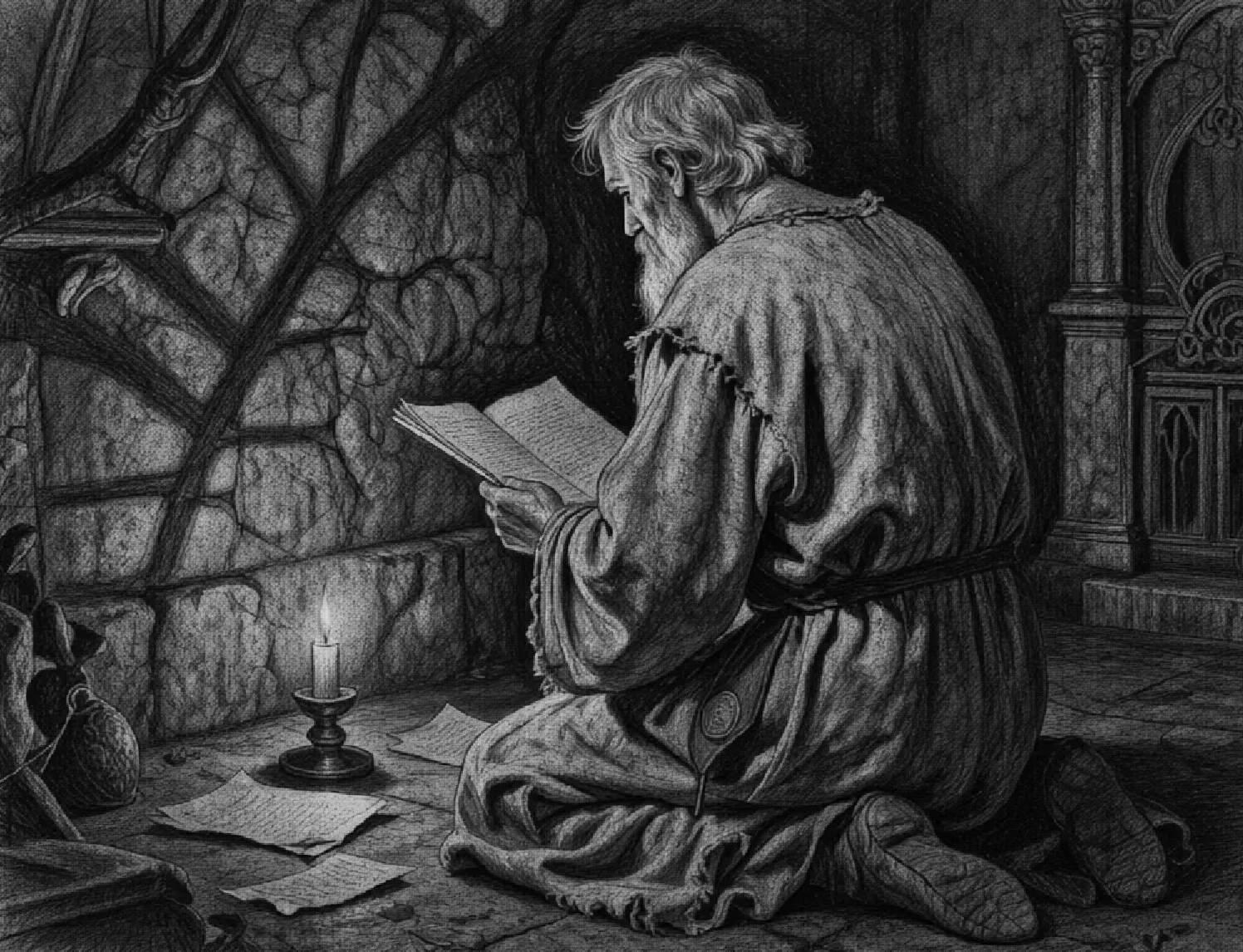
The monk was not a prisoner, he stayed there of his own volition, as did all the monks who chose the life of a reclusant. There were many people like this monk and though someone somewhere would have know his name and reason for coming to the temple, it was long forgotten.
One day deep in his meditation the monk sensed a presence. Not a presence in his dark little chamber but something surrounding him like an endless ocean of energy. Entranced, the monk focussed his mind travelling through to ocean to the source of power. There in his minds eye he found four shimmering, transcendent threads that expanded beyond his comprehension. In that moment the monk instinctively reached out to touch the nearest thread.
As soon as the monk touched the God Thread power surged through him like a bolt of lightning burning knowledge into his mind. The monk was thrown from his trance and visibly shaking he turned over the religious texts he had studied for years and began to write. Knowledge of the four cardinal gods, the planes of existence and the reality of life had seared the monks brain. He could barely order his thoughts and struggled to make sense of what he had seen. He wrote down the truth as best as he could understand reality, then staggered out of his seclusion to the wider world.
The monk was a raving madman, his mind severely damaged from contact with the divine. He tried to express himself, to tell the people the truth, but his rantings and writings were almost incomprehensible. In any of the years that had gone before, the man would have been dismissed as just another insane wretch, and cast off from society to die an ignominious death in obscurity. The connection with the God Threads had changed had both condemned the man to such a fate and saved him from the consequences. When he had touched the thread, he had unwittingly connected the God Threads to the mortal plane of existence. A revelation of the four gods began unfolding in the minds of every sentient man, woman and child, the instant the connection was made.
Unlike the man who had experienced the raw unvarnished truth, all in the blink of an eye, the rest of the population experienced a slower, developing, more convoluted, cloudy truth that built in their minds over a number of days. This event became known as the Holy Enlightenment and marked the beginning of the next age.
The Age of Holy Enlightenment
The monk who had first connected with the God Thread began to speak to all who would listen of the truth. With the Holy Enlightenment unfurling in the peoples mind’s his words rang true and crowds flocked to hear the monk’s ravings. The monk became known as the First Sage and was raised to the state of messiah. Four churches formed, one dedicated to each of the cardinal gods. With the revelation people across the planet began connecting with the God Threads. Any person who could bring their mind to resonate with the God Thread found they wield the gods power to shape the world.
Most people could only manifest minor miracles that could do little to achieve anything. Those who’s prayers granted impressive miracles gained status and power within the church. The leaders of each of the four churches formed the divine high council where they could make decisions that would be unified across the four churches. The high council presented itself as neutral in the politics of the Southern Realm and only concerned in religious matters. With the knowledge of the gods and the promise of neutrality all the elites of the realm approved the councils mandate. What quickly followed was the council quickly exerting its influence in all parts of the realm.
The Holy Enlightenment spread across all sentient beings, and caused countless old religions to be discarded in favour of devotion to the four cardinal gods. Nowhere was the effect of the revelation as severe as it was in the Southern Realm. The presence of the First Sage, who was forever marked by the God Threads, amplified the devotion in the people and gave the churches a figure to rally around. The divine high council kept the First Sage away from the masses and declared it spoke with his voice so he could focus on spiritual matters.
As the upheaval caused by the Holy Enlightenment began to settle and the high council coalesced power around itself, the First Sage was isolated in a temple. All marks of the old religions had been scoured from the realm, but the buildings had been repurposed. The temple the First Sage now lived in was not far from the underground chamber where he had spent so many years in isolation. The standards of his accommodation had improved considerably with lavish furnishings and numerous attendants to see to the First Sage’s every need. Despite this improvement the former monk had only deteriorated since he joined the God Threads to the mortal plane.
He had emerged from seclusion ranting and trying to make sense of the things he saw. As people began to call him the First Sage, he began writing down what was burnt into his brain. The high council took his writings, selected, edited, and codified them into the Divine Histories and the Laws of Holy Connection. These two holy texts were held as sacred to all four churches. The First Sage stopped writing as he lost the ability. He never even read the sacred texts as he quickly became forgetful and soon after needed carers to help him eat. The attendants did all they could but despite the growing power of the council the First Sage continued to decline. He was bedridden by the time the high council was collecting warrants from the aristocratic houses. The First Sage died as he had always expected to die. He was not in the seclusion chamber, but trapped and secluded in his own mind.
The death of the First Sage was never revealed to the masses. His body remained in the temple and his attendants disappeared. The divine high council unified the realm by declaring the start of the Age of Holy Enlightenment and held a great conference where the divine accords for the new age were made. Time moved on and divine high council continued to accrue power. The miracles of the gods had begun changing life for all people in the realm and period unprecedented peace followed the divine accords. This came to an end in the year of the Age of Holy Enlightenment, 137 when the jordnir appeared.
Tales of strange looking large men appearing in outlying settlements started spreading across the realm. Such stories were ignored at first, but when people started moving on mass the old kings thought foreigners had crossed the seas. An army was sent out to meet these strangers. The jordnir were confronted and though they claimed themselves to be perfect, expecting the humans to greet them with wonder, the people were disgusted. The two sides never came to blows that day and the jordnir retreated towards the western mountains, disappearing into a thick forest.
The consequences of the day the jordnir were confronted was soon felt. Hoards of the monsters spilt out of the forest and tore through the armies of man. The castles of the ancient world crumbled under the might of the jordnir. Not containing themselves to the Southern Realm, the jordnir stormed through seas to burn the world around them. Only the miracles of the gods could kill the creatures. Even with the power of the gods it took many blessed holy men praying together and doing so repeatedly to bring about the killing of a single jordnir. After three years of rage, humanity was pushed to the brink, with the population decimated and the ancient world in ruins. Before humanity was destroyed entirely, the jordnir relented. No one who survived the event that would be referred to as ‘The Daemon Rage’ knew why it stopped, but the world was left in a dark age where only fealty to the gods mattered.
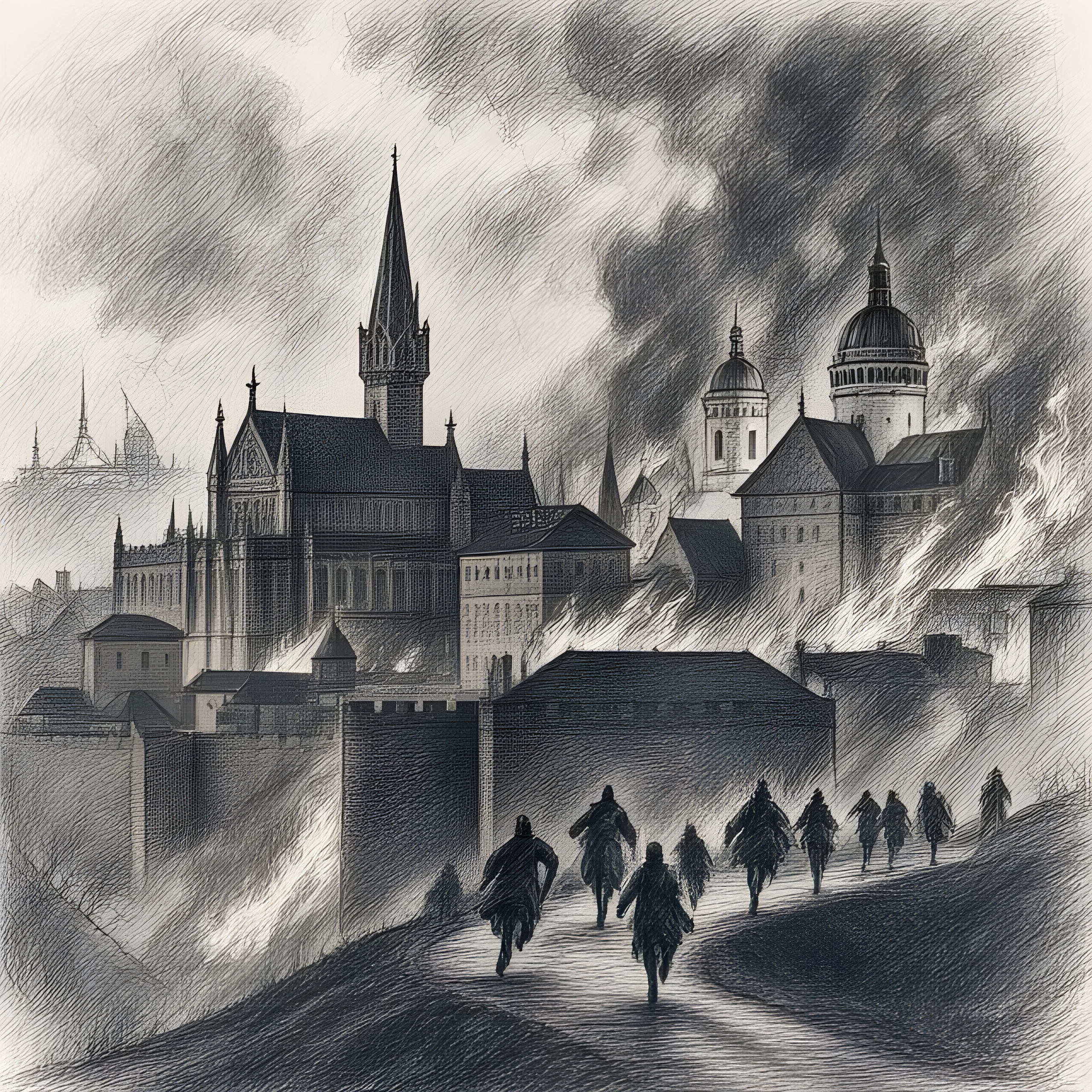
The Southern Realm was isolated from the world for many centuries following the disappearance of the jordnir. The monsters had come from that island and no one dared step foot there in case the creatures returned. In the same way any survivor from that land would never be allowed to leave. The Daemon’s Rage left deep scars across the soul of humanity. The survivors in the Southern Realm saw faith as their only saviour and bound tightly to their churches. The wetlands near the forest that had spawned the jordnir became an abandoned shunning ground and the people fled north. Three great city states were raised, each one by the joint prayers of thousands of the followers of Seg. Cities protected by impossibly high, impossibly thick walls were the sanctuaries that cradled the people of the Southern Realm. Defended by the walls of Seg, fed by the bounty of Veritenea, warmed by the flame of Vix, and hardened by the focus of Gamre, the three city states of the people and the four churches of the gods began to flourish again.
Centuries later people began to venture south to reclaim the rest of the Southern Realm. The city state of Fisherman’s Throne was established on the southern coast in the year of the Age of Holy Enlightenment, 475. The port city allowed people to harvest the untouched fishing waters around the island and the sudden increase in food brought about an explosion in population. Less than a hundred years later in the year 542, a fifth city state was founded on the west coast called Inglidsur. Ambitious people from the first four city states had wanted to set out on their own and were emboldened from the new sense of safety in the population. Unable to find enough land to found their own city, they crossed the forsaken wetlands and passed the southern tip of the black mountains. Here they were able to found their city Inglid– an ancient term for free, and –sur meaning sea.
When the crossing of the wetlands did not provoke any response from the jordnir a trade route was established between the first three city states and Inglidsur. As the population increased in the Southern Realm smaller settlements were established across the realm, but the wetlands were still avoided. Eventually, with so much time having passed the threat of the jordnir no longer weighed on the minds of the people in the wider world. The coastal city states eventually were able to establish trade routes. As trade caravans started crossing the wetlands regularly the jordnir began to re-appear. They would attack travellers passing through the wetlands, but never attempted to leave the area. To contain the threat and not wanting to give up valuable trade routes, the lowest in society and those found to have committed serious crimes would be banished to live in what became known as the Indigent Wetlands.
The realm grew richer as time passed, but even though the suffering of the people in the wetlands grew no leader of any city state wanted to risk open confrontation with the jordnir. The situation finally changed in the year 1124 when the survivors of a destroyed indigent settlement founded Maiden’s Haven. The Haven developed techniques and tools to kill jordnir. Hunting parties started making a difference in the wetlands and before long they were able to field a host to directly confront groups of jordnir. The early years of the Haven where chaotic and desperate but after they demonstrated an ability to bring some order to the wetlands region their status was given recognition. The church of the blessed truth, that followed Veritenea placed ordained members at the Haven and gave status within the church to senior members of the Haven. With the credibility of the church The Empire of the Red, one of the largest city states, accepted the Haven as a fiefdom. With the status granted by the empire, the Haven was no longer in limbo as an unaffiliated military host that had technically established lands east of the Serpent river.
Crossing the Serpent meant the people who founded the Haven, had broken their exile, by leaving the wetlands, and infringed on the territory of the empire. These facts were initially ignored because the Haven hunters had taken the pressure off the military assets the empire had been using to control the wetlands and maintain the western trade route. It was beneficial to the empire to focus on matters elsewhere in the realm and let the Haven continue. As the exploits of the Haven became more well known across the realm a well established member of the imperial family made a discreet request of the church to acknowledge their role so the empire would have an excuse to legitimise the Haven.
From this point the Age of Holy Enlightenment continued, with the people’s faith in the gods growing ever stronger. The Southern Realm continued to increase in population and develop ties with lands far and wide. Despite this the city states never unified into a single cohesive nation. The four churches and the five city states would form ever changing alliances with each other, sometimes leading to wars, but there was no major change to the functioning of the world. Not until the innocuous event of a scholar finding old writings in a ruin, in the year 1447 started a chain of events that would define the age on a global scale.